Skip to content
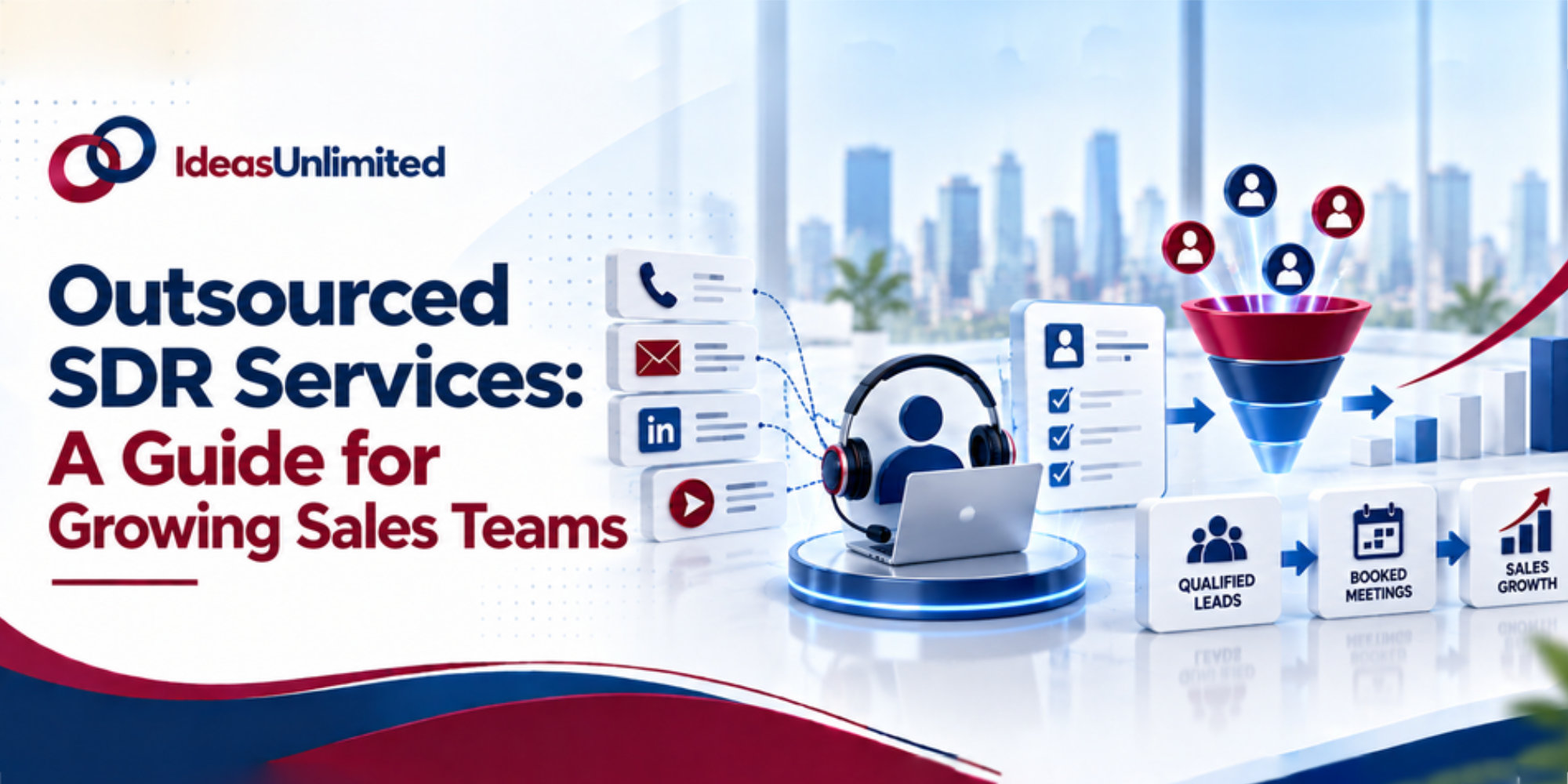
Growing a B2B sales pipeline takes time, people, and a consistent prospecting process. For many businesses, building a full in-house sales development team can be difficult. Hiring, training, managing, and scaling SDRs can require significant resources.
This is where outsourced SDR services can help.
An outsourced sales development team can support prospect research, outreach, lead qualification, follow-up, and appointment setting. It can work alongside an existing sales team and help create more sales conversations without requiring a business to build every function internally.
This guide explains how an outsourced SDR model works, what services it can include, when businesses should consider it, and what to look for when choosing a provider.
What Is an Outsourced SDR?
An outsourced SDR is a sales development representative who works for an outside provider. They are not part of a company’s in-house sales team.
SDRs usually focus on the early stages of the sales process. Their work can include:
- Finding potential customers
- Researching companies and decision-makers
- Building prospect lists
- Contacting prospects
- Sending cold emails
- Making outbound calls
- Qualifying leads
- Following up with prospects
- Booking sales appointments
- Updating CRM records
The goal is to create qualified sales opportunities for account executives or other sales team members.
Instead of hiring and managing every SDR internally, a business can use an external team to handle some or all of these activities.

How Outsourced SDR Services Work
The exact process depends on the provider and the company’s goals. However, most outsourced SDR services follow a structured sales development process.
1. Define the Ideal Customer
The first step is understanding who the business wants to reach.
This may include factors such as:
- Industry
- Company size
- Location
- Revenue range
- Technology used
- Business needs
- Job title
- Decision-making role
A clear ideal customer profile helps the SDR team focus its efforts on relevant prospects.
2. Research and Build Prospect Lists
The next step is finding companies and contacts that match the target profile.
An outsourced SDR team may research businesses, identify decision-makers, collect contact information, and organize the data in a CRM or other sales system.
IdeasUnlimited, for example, can support this stage through prospect research, lead sourcing, verified lead lists, data enrichment, and human verification.
Good data matters because inaccurate contact information can waste outreach efforts and make it harder for SDRs to reach the right people.

3. Start Outreach
Once the SDR team identifies prospects, they begin outreach.
Depending on the campaign, this can include:
- Cold email
- Cold calling
- LinkedIn outreach
- Follow-up messages
- Multi-channel outreach
The messaging should be relevant to the prospect rather than relying on a generic sales script.
4. Qualify Prospects
Not every response represents a sales opportunity.
SDRs can ask questions to determine whether a prospect fits the company’s target market and has a relevant business need.
Qualification criteria may include:
- Business need
- Decision-making authority
- Budget
- Timing
- Company fit
- Current solution or process
This helps sales teams focus their time on prospects that meet agreed qualification criteria.
5. Schedule Sales Meetings
When a prospect is qualified and interested, the SDR can schedule a meeting with the appropriate salesperson.
Appointment setting creates a clear handoff between sales development and the sales team.
IdeasUnlimited can support this part of the process through lead qualification, appointment setting, meeting confirmation, and follow-up management.

What Services Can an Outsourced SDR Team Provide?
The scope of outsourced SDR services can vary. Some businesses outsource only prospecting, while others use an external team for a broader sales development process.
Common services include:
Prospect Research
The SDR team identifies companies and decision-makers that fit the ideal customer profile.
Lead Sourcing
Lead sourcing involves finding potential customers and collecting the information needed for outreach.
Data Verification and Enrichment
Contact information can be checked and enriched before outreach. This helps sales teams work with more useful prospect data.
Cold Email Outreach
SDRs can develop and manage targeted email campaigns designed to start conversations with potential buyers.
Cold Calling
Outbound calling gives SDRs another way to reach prospects and engage decision-makers directly.
Lead Qualification
SDRs can evaluate responses against predefined criteria and identify prospects that are suitable for sales follow-up.
Appointment Setting
Qualified prospects can be scheduled for conversations with account executives, sales managers, or other sales team members.
Follow-Up
Many prospects do not respond to the first message. Consistent follow-up can keep conversations going without requiring the internal sales team to manage every touchpoint.
CRM Support
SDRs can update prospect records, record interactions, manage follow-up tasks, and keep sales information organized.
Outsourced SDR vs. In-House SDR
Both models can support sales development, but they work differently.
An in-house SDR team is employed and managed directly by the company. This gives the business direct control over hiring, training, processes, and daily management.
With an outsourced SDR model, an external provider manages some or all of the SDR function.
The right structure depends on the company’s resources, sales process, growth stage, and required level of control.

When Should a Business Consider SDR Outsourcing?
SDR outsourcing can make sense in several situations.
You Need More Sales Development Capacity
An internal sales team may have strong closing skills but limited time for prospecting.
An outsourced SDR team can handle early-stage activities and free salespeople to focus on qualified opportunities.
You Want to Enter a New Market
Entering a new market requires research, prospect identification, and outreach.
An external team can help businesses test a market before making a larger investment in an internal sales operation.
Your Sales Team Is Spending Too Much Time Prospecting
Account executives often need to balance prospecting, meetings, proposals, negotiations, and closing.
Moving some prospecting activities to an SDR team can help separate sales development from closing activities.
You Need to Scale Outreach
A company may want to increase outbound activity without immediately expanding its internal team.
An outsourced model can add sales development capacity. It also lets the business adjust the engagement scope as needs change.
You Do Not Have an Established SDR Function
Building an SDR team requires processes, technology, training, management, and performance tracking.
An experienced provider can help establish these processes instead of requiring the business to build everything from scratch.
What Makes an Effective Outsourced SDR Program?
Hiring an external SDR team does not automatically create better sales results. The process needs to be well designed.
Clear Targeting
The provider should understand the company’s ideal customers and target decision-makers.
Poor targeting can result in large numbers of irrelevant prospects.
Reliable Prospect Data
SDRs need accurate information regarding outsourced sales services to reach the right people.
A strong process should include data verification and enrichment where appropriate.
Relevant Messaging
Outreach should reflect the prospect’s business context.
Email and calling scripts should give a clear reason to start a conversation rather than simply pushing a product or service.
Consistent Follow-Up
Prospecting rarely ends after one contact attempt.
A structured follow-up process helps SDRs maintain conversations and manage prospects through different stages.
Clear Qualification Criteria
The sales team and SDR team should agree on what qualifies as a sales-ready prospect.
This prevents confusion during the handoff.
Strong Sales Handoff
Once a meeting is booked, the salesperson should have enough information to understand the prospect and the meeting reason.
A clean handoff can make the transition from SDR activity to sales conversation smoother.
How to Measure an Outsourced SDR Team
Businesses should define performance measures before launching an outsourced SDR program.
Useful metrics can include:
- Number of prospects researched
- Number of verified contacts
- Outreach attempts
- Email response rate
- Call connection rate
- Positive response rate
- Qualified leads
- Meetings booked
- Meetings held
- Sales opportunities created
- Conversion from qualified lead to opportunity
The most useful metrics depend on the campaign.
For example, a new outbound campaign may initially focus on prospect quality and engagement. A mature campaign may place greater emphasis on qualified meetings and sales opportunities.
The key is to connect SDR activity to the wider sales process rather than measuring activity alone.

Common Mistakes to Avoid
Businesses can run into problems when they outsource SDR work without establishing clear expectations.
Targeting Too Broad an Audience
A large prospect list does not necessarily create a strong pipeline. Targeting should be based on the company’s ideal customer profile.
Focusing Only on Activity
A high number of calls or emails does not automatically mean the campaign is effective. Businesses should also examine engagement, qualification, meetings, and opportunities.
Using Generic Messaging
Prospects are more likely to ignore messages that do not relate to their business or role.
Poor Sales Handoffs
A booked meeting is only useful when the sales team understands why the prospect agreed to speak.
Ignoring Follow-Up
Many potential opportunities require multiple interactions. A weak follow-up process can cause interested prospects to drop out of the pipeline.
Failing to Define Success
Before starting an outsourced SDR program, both sides should agree on target audiences, qualification criteria, responsibilities, reporting, and key metrics.
Is an Outsourced SDR Right for Your Business?
An outsourced SDR model can support businesses that need more prospecting capacity without immediately building a larger internal team.
It can be useful for companies that want to:
- Increase outbound prospecting
- Enter new markets
- Generate more qualified conversations
- Reduce the prospecting workload for salespeople
- Test new sales channels
- Scale sales development activity
- Add SDR support to an existing sales team
However, outsourcing works best when a business has clear goals. It also helps to define your audience. A sales process that supports qualified leads is important too.
The goal should not simply be to generate more activity. It should be to create meaningful sales conversations with prospects that fit the business.

How IdeasUnlimited Supports Outsourced SDR Programs
For businesses that want external sales development support, IdeasUnlimited can fit into different stages of the sales process.
The process can begin with prospect research, lead sourcing, and verified lead lists. Data enrichment and human verification can then help prepare prospects for outreach.
For outreach campaigns, the team can support cold emails and cold calls. This depends on the target audience and campaign needs.
As prospects respond, lead qualification and follow-up management can help identify relevant opportunities and keep conversations moving.
For businesses that need extra support, IdeasUnlimited can help set appointments. It can also help confirm meetings. It can provide CRM support. It can offer SDR services.
This approach lets a business outsource some sales development tasks. It still keeps the internal sales team involved in the sales process.
Final Thoughts
An outsourced SDR team can help businesses expand their sales development capacity without building every SDR function internally. From prospect research and verified data to cold emails and calls, the right process supports early sales pipeline stages.
IdeasUnlimited can help businesses manage these activities through outsourced SDR services, while working alongside their existing sales teams.
Whether you need additional prospecting capacity, support entering a new market, or a scalable sales development process, the key is to choose a model that fits your goals, target audience, and sales process.
The objective is simple: find the right prospects, start relevant conversations, qualify opportunities, and give your sales team more time to sell.