Skip to content
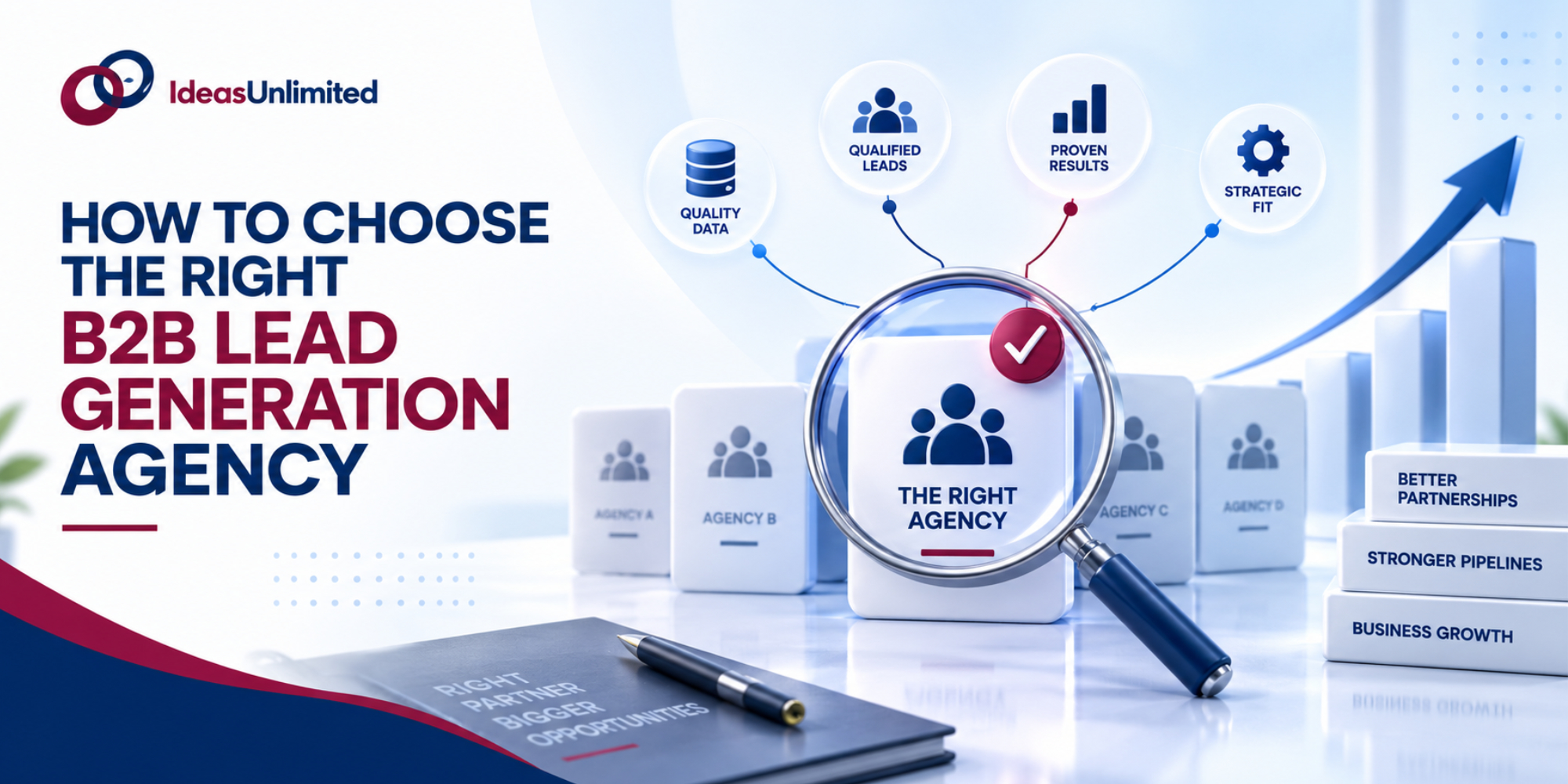
Choosing a B2B lead generation agency is not just a sourcing decision. It affects pipeline quality, sales capacity, customer acquisition cost, and the way prospects experience your brand before they ever speak with your team. The right partner should help you define the market, find credible contacts, verify data, run disciplined outreach, qualify interest, and support handoff to sales without creating operational noise.
Many b2b lead generation agencies look similar on the surface. The evaluation needs to go deeper than lists, scripts, and promised meeting volume. Use the steps below to compare capability, fit, transparency, and execution quality before you commit.
What should you clarify before you contact an agency?
Before you evaluate a b2b lead generation agency, define what success must mean for your business. A vague goal such as “more leads” will make every proposal sound acceptable. A clearer goal, such as qualified appointments with US-based SaaS operations leaders, gives you a better basis for judgment.
Start with the commercial outcome. Decide whether you need new market research, b2b sales leads, booked meetings, SDR support, or a broader b2b lead generation and marketing agency that can manage multiple outreach functions. IdeasUnlimited is a useful example of the wider model because its work can include prospect research, lead sourcing, verified lead lists, data enrichment, outreach support, lead qualification, appointment setting, CRM support, and follow-up management.
Clarify these points internally:
- Your target industries, company sizes, and buying committees.
- Your geographic focus, especially if you sell across the United States.
- Your preferred channels, such as cold email, cold calling, or multi-channel outreach.
- Your qualification rules, including budget, authority, need, timing, and fit.
- Your sales team’s capacity to accept meetings and complete follow-up.
- Your CRM requirements and reporting expectations.
This preparation keeps the discussion practical. It also helps you identify whether a lead generation firm understands your revenue process or is only selling activity.

1. Define the exact problem the agency must solve
Do not begin with the agency’s service menu. Begin with the constraint inside your own sales system. Some companies lack enough target accounts. Others have lists but poor contact quality. Some need appointment setting, while others need outsourced sales development because the internal team cannot support consistent outreach.
Write the problem in operational terms. For example, you may need a business development agency to build a clean prospect database, test messaging, call into target accounts, qualify early interest, and confirm meetings for account executives. That is very different from buying a static list of contacts.
A strong agency will ask about your sales cycle, average deal complexity, handoff process, and current conversion gaps. If the conversation stays only at the level of “number of leads per month,” the partner may not be equipped to support long-term pipeline quality.
2. Check the agency’s understanding of your market
A generalist agency can work well when it has a disciplined research process. Still, some markets need extra care. A b2b healthcare lead generation agency, for instance, must understand strict buyer environments, complex stakeholder groups, and the importance of accurate role-based targeting. The same principle applies to technology, manufacturing, logistics, professional services, and financial services.
Ask how the agency builds its target account logic. It should be able to explain how it identifies companies, finds decision-makers, filters irrelevant contacts, and validates data. Avoid partners that rely only on broad titles or generic industry categories.
Good b2b marketing solutions are specific enough to reduce waste. They should help you distinguish between users, influencers, economic buyers, technical evaluators, and procurement stakeholders. That distinction matters because the right message for an operations leader may not work for a finance executive.
3. Evaluate lead data quality before outreach begins
Poor data creates false activity. Sales teams can spend hours chasing inactive emails, outdated titles, duplicate records, and contacts that don’t match the target market. For that reason, data quality should be one of your first evaluation points.
Ask each b2b lead generation firm how it handles prospect research, lead sourcing, human verification, and data enrichment. IdeasUnlimited’s model shows why this matters: verified and enriched prospect data gives outreach teams a stronger starting point than unreviewed lists. It also reduces friction later in CRM hygiene, sales follow-up, and reporting.
- Look for these signs of a mature data process:
- The agency defines source criteria before list building starts.
- Contacts are checked against role, company, industry, and location requirements.
- Records include useful context, not only names and email addresses.
- Human review supports automated tools where accuracy matters.
- Data can be formatted for your CRM and sales workflow.
A lead list is not valuable because it is large. It is valuable when it reflects the market you can actually serve.

4. Review the outreach strategy and channel mix
Lead generation strategies should match buyer behavior, sales complexity, and brand risk. Cold email can work well for targeted introductions and follow-up sequences. Cold calling can create faster feedback and clarify interest when contact information is accurate. Multi-channel outreach can support consistency when it is coordinated rather than intrusive.
Ask the agency to explain its outreach logic. It should cover audience segmentation, message testing, calling approach, follow-up timing, meeting confirmation, and how it prevents prospects from receiving conflicting communication. IdeasUnlimited is relevant here because its services include cold email, cold calling, follow-up management, meeting confirmation, and multi-channel outreach, which are often needed when a company wants external support without losing control of the buyer experience.
Review sample messaging with care. The writing should sound like your company, not like a template sent to thousands of people. Strong outreach is concise, relevant, and easy for the prospect to answer.
5. Test how the agency qualifies leads
Not every response is a lead. Not every meeting is worth a salesperson’s time. A reliable B2B lead generation agency should define qualification rules before campaigns begin and apply them consistently.
Ask how the agency separates interest from fit. Lead qualification should consider company profile, buyer role, business need, urgency, and whether the prospect has agreed to a meaningful next step. IdeasUnlimited’s lead qualification and appointment setting services illustrate the conversion side of outsourced lead generation: the goal is not only to start conversations, but also to help sales teams receive better-prepared opportunities.
Also ask what happens after a meeting is booked. Meeting confirmation, rescheduling support, notes, and CRM updates can affect show rates and salesperson readiness. If these details are vague, the agency may create administrative work for your internal team.

6. Assess SDR support and sales handoff
Many b2b lead generation companies position themselves as appointment setters. That may be enough for simple offers. For more complex sales cycles, you may need SDR support that resembles an extension of your sales development function.
Assess whether the partner can support daily execution. SDR support may include prospecting, outreach, call handling, qualification, follow-up, calendar coordination, CRM support, and clear notes for account executives. IdeasUnlimited’s scalable outsourced sales development services fit this category because they can support lead generation activity while helping maintain process continuity.
The handoff should be precise. Your sales team should know why the prospect accepted the meeting, what problem was discussed, who will attend, and what follow-up has already occurred. Without that context, even a booked meeting can lose momentum.
7. Examine reporting, transparency, and CRM discipline
Reporting should help you make decisions, not merely prove that activity happened. Ask which metrics the agency tracks and how often it reviews them with you. Useful reporting may include list quality, outreach volume, connection rates, replies, qualified leads, appointments set, meeting status, and reasons prospects are not moving forward.
CRM support is also important. If the agency works inside your CRM or supplies import-ready records, define field requirements, ownership rules, and update cadence. This prevents duplicate records and incomplete notes from weakening your sales operations.
Transparency matters most when performance changes. A good partner will identify whether the issue sits in targeting, messaging, offer relevance, channel selection, or follow-up speed. Agencies that cannot diagnose performance usually cannot improve it.
How should you compare proposals?
Compare proposals by scope, process quality, accountability, and operational fit. Price matters, but the cheapest option may cost more if it produces poor data, weak meetings, or extra work for your team. A careful proposal review should show exactly what the agency will do, what your team must provide, and how both sides will measure progress.
Use this checklist:
- Does the proposal define your target market in practical detail?
- Does it explain how prospect data will be sourced, verified, and enriched?
- Does it distinguish between leads, qualified leads, and appointments?
- Does it specify outreach channels, review cycles, and approval points?
- Does it include follow-up management and meeting confirmation if needed?
- Does it explain CRM support and reporting structure?
- Does it avoid unsupported guarantees or vague performance claims?
A serious b2b lead generation and marketing agency will welcome these questions. The answers reveal whether you are buying a managed revenue process or a disconnected set of tasks.

8. Run a structured pilot before a long commitment
A pilot gives both sides a controlled way to test fit. It should have a defined audience, agreed messaging, clear qualification rules, and a review schedule. Avoid pilots that are too broad, because the results will be hard to interpret.
Set expectations around learning as well as outcomes. Early campaigns often reveal which titles respond, which objections appear, and which value points create interest. IdeasUnlimited’s combination of prospect research, verified lead lists, outreach, lead qualification, appointment setting, and CRM support can be evaluated in this type of structured pilot without requiring you to judge the relationship on volume alone.
At the end of the pilot, review the quality of work as closely as the numbers. Examine sample records, call notes, email replies, qualification notes, meeting attendance, and sales feedback. If the agency learns quickly and communicates clearly, it may be a strong long-term partner.
Red flags to avoid during evaluation
Some warning signs appear before a contract is signed. Treat them seriously. A partner that cuts corners during evaluation may cut corners during delivery.
- Be cautious when an agency:
- Promises exact revenue outcomes without enough context.
- Cannot explain how it verifies data.
- Uses the same messaging approach for every market.
- Focuses on lead quantity while avoiding qualification standards.
- Resists CRM visibility or detailed reporting.
- Offers appointments without explaining confirmation and handoff.
- Gives no clear process for testing, learning, and improving.
These issues do not always mean the agency is unsuitable. They do mean you should ask more questions before you proceed.

How IdeasUnlimited supports outsourced B2B lead generation
Choosing the right B2B lead generation agency starts with understanding what your business actually needs. Look beyond lead volume and evaluate targeting, data quality, outreach, qualification, reporting, and sales support.
The right partner should help your team reach better prospects, create qualified conversations, and maintain a healthier sales pipeline.
IdeasUnlimited provides flexible B2B lead generation services designed to support businesses across prospect research, lead sourcing, outreach, qualification, appointment setting, and SDR support.
For growing businesses that want to expand their outbound sales efforts without building a large internal prospecting team, the right agency can provide the capacity needed to create more opportunities and support long-term growth.