Skip to content
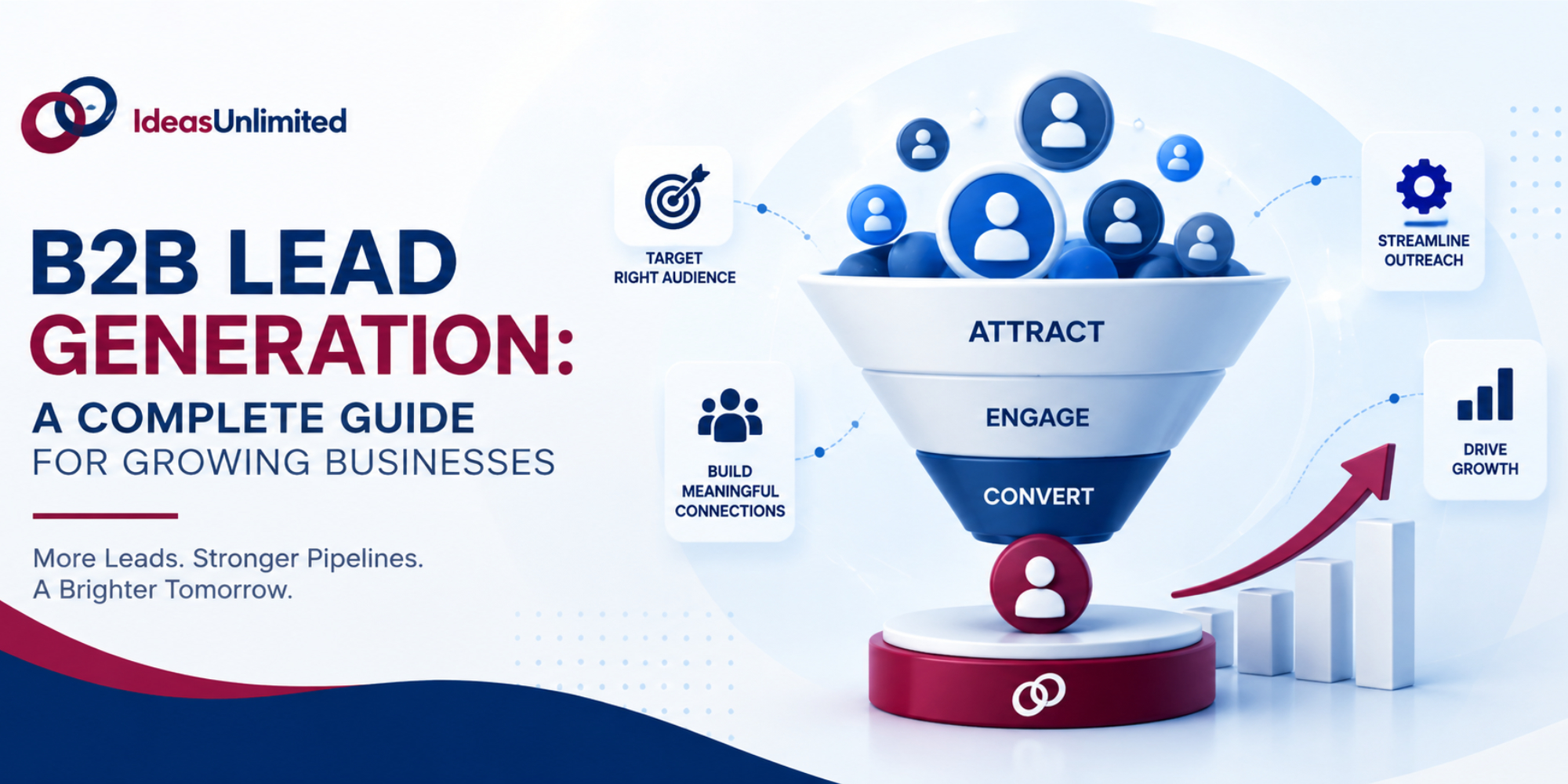
Finding the right customers is one of the biggest challenges for a growing business. You may have a strong product or service and an experienced sales team. But without a steady flow of potential leads, growth can slow down.
That is where business-to-business lead generation comes in.
B2B lead generation helps companies identify potential customers, start meaningful conversations, qualify prospects, and create new sales opportunities. It can include prospect research, cold calls, email marketing, appointment setting, lead qualification, and follow-up.
For companies that want to grow without a large in-house prospecting team, outsourcing is a practical option because it helps expand sales capacity.
What Is B2B Lead Generation?
B2B lead generation means finding businesses and decision-makers who may need your products or services. It also means turning them into potential sales opportunities.
The process starts with identifying your ideal customers. From there, businesses research prospects, build targeted lists, verify contact information, and reach out through relevant channels.
A typical B2B lead generation process may include:
- Defining an ideal customer profile
- Researching target businesses
- Identifying relevant decision-makers
- Building targeted prospect lists
- Verifying and enriching lead data
- Using email marketing and cold calls
- Qualifying potential leads
- Following up with prospects
- Setting sales appointments
- Moving qualified opportunities into the sales pipeline
The goal is not simply to collect a large database of contacts. The goal is to find prospects with a real need. They should fit your target market. They may become customers over time.

Why B2B Lead Generation Matters for Growing Businesses
A healthy sales funnel needs a consistent flow of new prospects. Without that flow, even a strong sales team can struggle to maintain enough opportunities.
Effective B2B lead generation can help businesses:
Create a Consistent Sales Pipeline
A reliable lead generation process keeps new prospects entering the sales pipeline. This gives sales reps more chances to connect with new prospects. This also means that:
- They don’t have to rely only on referrals.
- They also don’t have to rely only on existing customers.
- They don’t have to wait for occasional inbound inquiries.
Reach the Right Decision-Makers
B2B purchases often involve multiple stakeholders. Good prospect research helps businesses identify the people who influence or make purchasing decisions.
Give Sales Teams More Time to Sell
Research, list building, outreach, and follow-up can take significant time. Handling these tasks through a dedicated lead generation team lets sales reps spend more time talking. They can also focus on closing deals.
Improve Lead Quality
More leads do not always mean more sales. A focused strategy helps businesses find leads that match their ideal customer profile. It avoids filling the database with contacts unlikely to convert.
Support Predictable Growth
When lead generation follows a repeatable process, businesses can see where opportunities come from. They can also track how prospects move through the sales funnel.
A strong business-to-business lead generation strategy uses targeted prospecting and the right B2B lead generation solutions. It helps you reach and engage potential customers.
Well-planned B2B lead generation campaigns use prospect research and personalized outreach.
They also use cold emails and follow-ups to reach the right decision-makers. By combining these activities with effective B2B lead generation services, companies can better support sales teams. This helps create a consistent flow of qualified opportunities.
How Does the B2B Lead Generation Process Work?
Successful b2b lead generation strategies usually follow a structured process. The exact approach will vary by industry, audience, and sales model, but the fundamentals remain similar.
1. Define Your Ideal Customers
The first step is deciding who you want to reach.
Consider factors such as:
- Industry
- Company size
- Location
- Revenue
- Business model
- Technology
- Job title
- Business needs
- Buying behavior
A clear customer profile helps your team focus on prospects that are more likely to need your products or services.
2. Research and Build Prospect Lists
Once your target audience is clear, research businesses that fit your criteria.
A useful prospect list can include:
- Company name
- Website
- Industry
- Location
- Decision-maker
- Job title
- Business email
- Phone number
- Relevant company information
Quality matters here. A smaller list of well-matched prospects can be more valuable than thousands of poorly targeted contacts.
3. Verify and Enrich Lead Data
Outdated information can undermine even the best campaign.
Check email addresses, phone numbers, job titles, and company information before outreach begins. Additional information can also help sales and marketing teams understand the prospect and personalize their approach.
At IdeasUnlimited, lead generation support can include prospect research and verified lead lists. It can also include data enrichment and human checks. These services help businesses start with cleaner, more useful prospect data.
4. Choose the Right Outreach Channels
No single outreach channel works for every B2B company.
Depending on the audience, campaigns may use:
- Cold email
- Cold calls
- LinkedIn outreach
- Follow-up campaigns
- Account-based outreach
- Multi-channel outreach
The right channel depends on where your target customers are most accessible and how they prefer to communicate.
5. Personalize the Outreach
Generic messages are easy to ignore.
Effective outreach should give prospects a reason to pay attention. This could involve referencing their industry, company, role, business challenge, or a relevant intent signal.
Personalization does not mean writing every message from scratch. It means making the communication relevant enough that the prospect understands why you are contacting them.
This is where experienced outreach teams can add value. At IdeasUnlimited, outreach can combine cold email, cold calling, and personalized prospect engagement based on the campaign’s target audience.
6. Qualify Potential Leads
A response does not automatically mean that a prospect is ready to buy.
Lead qualification helps determine whether a prospect is a good fit. This may involve factors such as:
- Business need
- Company fit
- Decision-making authority
- Budget
- Timing
- Interest in the solution
The goal is to separate genuine opportunities from contacts that are unlikely to progress.
7. Set Appointments and Follow Up
Some prospects may be ready for a sales conversation after the first interaction. Others may need additional follow-up.
A structured follow-up process helps businesses stay connected without overwhelming prospects.
The team can then move qualified prospects toward an appointment with the appropriate sales team.
IdeasUnlimited can support this stage with lead qualification and appointment setting. It can also manage follow-ups and confirm meetings. This gives internal sales teams more qualified conversations.

What Are B2B Lead Generation Solutions?
B2B lead generation solutions are services, systems, or processes that help businesses find and engage potential customers.
Depending on the business, these solutions can cover:
- Prospect research
- Lead list building
- Data verification
- Cold calling
- Cold email
- Email marketing
- Lead qualification
- Appointment setting
- SDR support
- CRM management
- Follow-up
- Sales development
Some businesses manage these activities internally. Others outsource specific parts of the process or use an external team to manage lead generation from prospecting through qualification.
The right approach depends on your goals, resources, sales process, and target market.
In-House vs. Outsourced B2B Lead Generation
Businesses typically have two options: build an internal lead generation operation or work with an external provider.
In-House Lead Generation
An internal team provides direct control over the sales process. However, building that team requires hiring, training, management, technology, data, and ongoing oversight.
This can work well for companies with enough sales volume and resources to maintain a dedicated prospecting team.
Outsourced Lead Generation
Outsourcing allows a business to use an external team for some or all of its lead generation activities.
Depending on the provider, this may include prospect research, verified lead lists, cold outreach, qualification, appointment setting, and SDR support.
For growing businesses, this approach can provide additional sales capacity without requiring the company to build a large internal team from scratch.
At IdeasUnlimited, businesses can use outsourced lead generation support based on their specific requirements. Some may need verified leads and prospect research, while others may need a broader service that includes outreach, qualification, appointment setting, and SDR support.
When Should You Consider Outsourcing?
Outsourcing may be worth considering when your sales and marketing teams:
- Do not have enough time for prospecting
- Need more qualified opportunities
- Want to enter a new market
- Need additional SDR capacity
- Struggle to maintain consistent outreach
- Want to scale without rapid hiring
- Need support with appointment setting
- Lack the resources to manage large-scale outreach
It can also be useful when your sales process is working but your team simply needs more capacity at the top of the funnel.
For example, IdeasUnlimited can provide additional sales development capacity while your internal team focuses on conversations, proposals, and closing opportunities.

How to Measure B2B Lead Generation Success
Generating leads is only the beginning. Businesses need to understand whether those leads are contributing to the overall sales process.
Important metrics include:
Qualified Leads
Measure how many prospects meet your predefined qualification criteria.
Appointment Booking Rate
If your campaign includes appointment setting, track how many qualified prospects agree to a sales meeting.
Lead-to-Opportunity Conversion
This shows how many leads progress into genuine sales opportunities.
Cost per Qualified Lead
This helps determine how efficiently your campaign generates qualified prospects.
Sales Conversion Rate
Track how many qualified opportunities eventually become customers.
Pipeline Contribution
Look beyond individual leads and measure how much new pipeline the campaign creates.
The goal is to understand the full journey from potential leads to qualified opportunities and, eventually, customers.
Common B2B Lead Generation Mistakes
Even a well-planned campaign can underperform when people overlook basic principles.
Targeting Everyone
A broad audience often produces poor results. Define your ideal customer before beginning prospecting.
Using Poor-Quality Data
Incorrect contact information can waste time and reduce outreach effectiveness. Verify prospect data before contacting leads.
Focusing Only on Volume
A large database does not guarantee better results. Relevance and lead quality matter more than raw numbers.
Sending Generic Messages
Prospects are more likely to respond when outreach addresses something relevant to their business.
Ignoring Follow-Up
Many B2B prospects do not respond immediately. A structured follow-up process can create additional opportunities.
Measuring Only Lead Volume
A campaign that generates thousands of contacts but few qualified opportunities may not be successful. Measure the full sales process.
How to Choose a B2B Lead Generation Partner
Choosing a provider requires more than looking at the size of its contact database.
Ask potential providers:
- How do you identify prospects?
- How do you verify lead data?
- How do you define a qualified lead?
- Which outreach channels do you support?
- Can you handle cold calls and email outreach?
- Do you provide appointment setting?
- How do you personalize campaigns?
- How do you manage follow-up?
- How do you report campaign performance?
- Can your team work with our CRM?
- Can the service scale as our needs change?
You should also look at the provider’s approach to your specific market. A strong partner should understand your target audience, sales process, products or services, and business goals.
A case study or past examples can show how the provider supported businesses with similar goals.
B2B Lead Generation Strategies That Support Long-Term Growth
Lead generation should not operate separately from your sales and marketing efforts.
The strongest b2b lead generation strategies connect prospecting with qualification, outreach, follow-up, and sales.
Your team should understand:
- Who you want to reach
- Why they are a good fit
- What problem you solve
- Which outreach channel to use
- How to identify buying signals
- When to follow up
- When to involve sales reps
- How to measure results
Search visibility, content marketing, email marketing, outbound outreach, and sales development all support customer acquisition.
The goal is to create a sales process where each activity supports the next stage.

Final Thoughts
Effective B2B lead generation means finding the right prospects. It also means engaging them with relevant messages. Then, it turns qualified opportunities into a strong sales pipeline.
Some businesses generate leads in-house. Others outsource lead generation. This helps them increase sales capacity without building a large internal team.
IdeasUnlimited provides B2B lead generation services covering prospect research, verified lead sourcing, data enrichment, cold outreach, lead qualification, appointment setting, and SDR support.
For businesses looking to grow outbound sales, IdeasUnlimited’s B2B lead generation outsourcing services offer flexibility. They help build a stronger pipeline and let internal sales teams focus on closing deals.