Skip to content
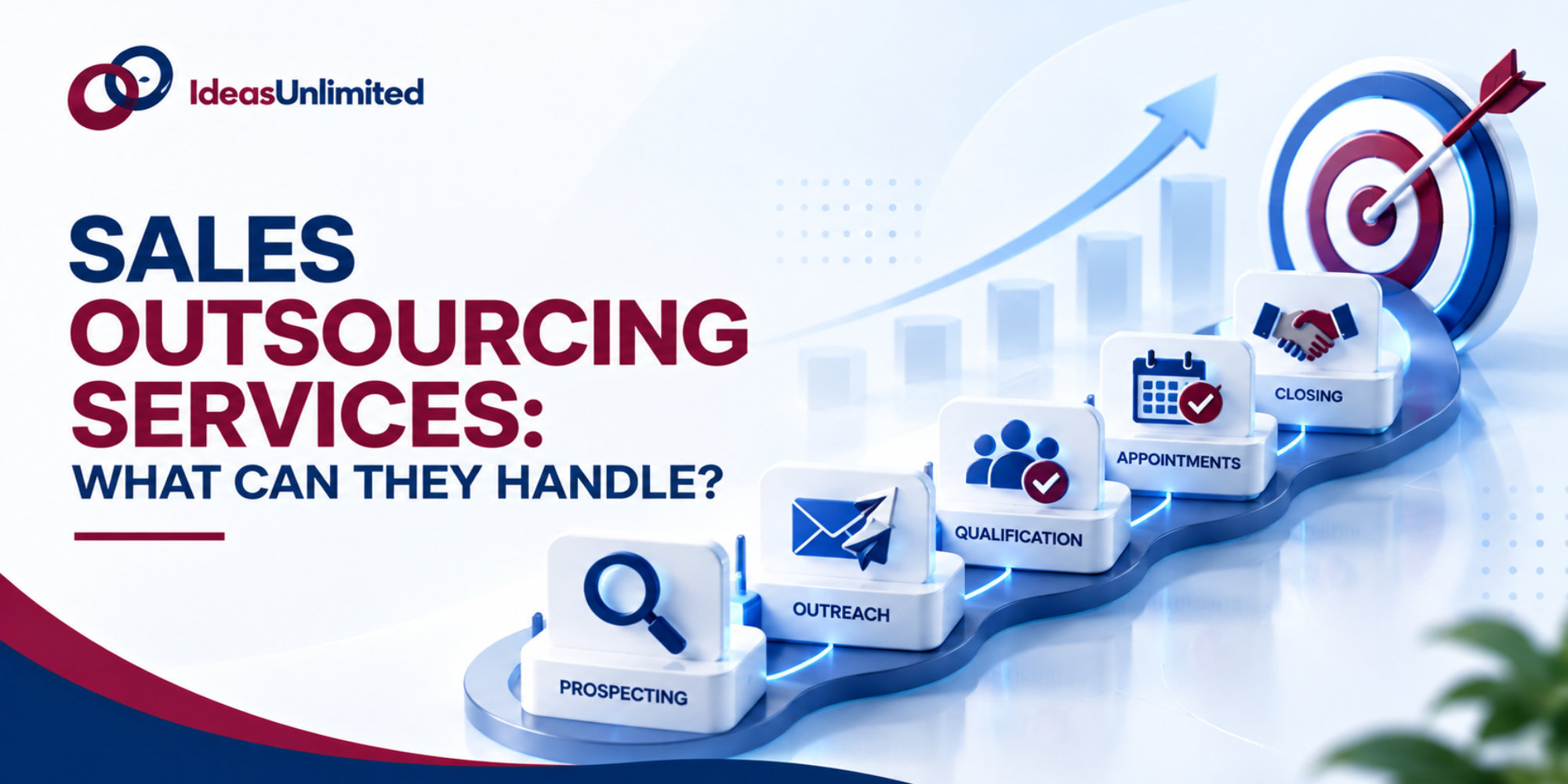
A sales team’s work starts long before a prospect becomes a customer. They need to find prospects, conduct outreach, qualify leads, follow up, and keep the sales pipeline moving. When your internal team does not have enough time or resources to manage all these activities, sales outsourcing services can provide the support you need.
An outsourced sales team can handle part of your sales process or manage your complete sales process. The right approach depends on your goals, target market, sales process, and where your internal team needs additional support.
What an Outsourced Sales Team Can Handle
An outsourced sales team can support different stages of the sales process, including finding and engaging prospects, qualifying leads, setting appointments, and following up on opportunities. The level of support can vary depending on which parts of the process your business wants to outsource.

Here are some of the main functions an outsourced team can handle.
1. Prospect Research and List Building
Sales outreach starts with finding the right prospects. An outsourced team can research companies and identify contacts that match your target customer profile.
The team can build prospect lists based on factors such as industry, company size, location, job role, and your ideal customer profile. This gives your sales representatives relevant prospect data to prioritize outreach instead of spending hours researching accounts themselves.
2. Outbound Prospecting
Once you identify prospects, an outsourced team can reach out through channels such as phone, email, or LinkedIn.
The goal is to create relevant conversations with potential customers. The team can use your messaging, target audience, and qualification requirements to guide its outreach.
Outbound prospecting is also a common responsibility for sales development representatives. SDRs typically focus on identifying prospects, initiating conversations, qualifying leads, and passing qualified opportunities to account executives. This makes outbound prospecting a practical area for sales outsourcing services.
3. Lead Qualification
Not every lead is ready for a sales conversation. Your team needs to determine whether a prospect meets your qualification criteria, such as business fit, decision-making authority, timing, and budget.
An outsourced team can qualify leads based on the criteria you establish. These may include business fit, decision-making authority, timing, budget, and other defined requirements.
Qualified leads can then be handed over to your internal sales team with relevant information from the initial conversation. This lets account executives spend more time with prospects who meet the agreed qualification criteria.

4. Appointment Setting
An outsourced team can arrange meetings between qualified prospects and your sales representatives.
Appointment setting involves more than putting a meeting on the calendar. The team should confirm that the prospect meets your requirements, understand the prospect’s reason for taking the meeting, and provide useful background information to the salesperson.
Clear qualification standards help ensure that your sales team receives qualified opportunities rather than simply a high number of appointments.
5. Follow-Up
Prospects do not always respond after the first contact. Some may need more information or additional time before they are ready to speak with a salesperson.
An external team can manage follow-up based on your agreed process. This may include additional calls, emails, or other follow-up activities.
Consistent follow-up gives prospects a clear next step and helps prevent missed opportunities.
6. SDR Support
SDR outsourcing allows businesses to add sales development capacity without building an entire team internally.
SDRs generally focus on the early stages of the sales process. Their responsibilities can include researching prospects, conducting outreach, qualifying leads, and scheduling meetings for account executives.
This lets your internal salespeople spend more time on discovery, proposals, negotiations, and closing instead of handling every prospecting activity themselves.

7. Campaign-Based Sales Support
Not every business needs a permanent outsourced sales team. In some cases, you may only need support for a specific campaign.
An external team can support activities such as a new product launch, seasonal campaign, targeted account campaign, or market test. You can define the audience, messaging, timeline, and expected results before the campaign begins.
This approach gives your business additional sales capacity for a specific campaign without creating a permanent internal position.
8. Market Expansion Support
Entering a new market requires an understanding of the companies and buyers you want to reach. Your team may also need to test messaging and learn how prospects respond to your offer.
An outsourced sales team can support this early work by researching accounts, contacting prospects, testing outreach, and recording feedback.
This information can help your business evaluate whether the target market and sales approach are worth pursuing before making a larger investment.

How Do Sales Outsourcing Companies Work With Your Team?
Sales outsourcing works best when your business and the provider agree on responsibilities and processes before outreach begins. The provider should understand your target customer, offer, messaging, qualification requirements, and sales goals, while both teams establish how leads are handled and transferred to your internal sales team.
Both teams should agree on lead handling. This includes when a lead becomes qualified, how you record information, and when you transfer the opportunity to your internal sales team.
CRM access can help both teams maintain visibility. Your company can review prospect information, sales activity, meetings, and pipeline progress without relying on separate systems.
The exact approach can differ between sales outsourcing companies, so clearly document responsibilities and processes from the start.
What Should You Look for in a Sales Outsourcing Partner?
Choosing a provider should involve more than comparing prices or the number of representatives available.
Look for a partner that offers:
- Relevant experience: The team understands your market, buyer type, or sales environment.
- A clear process: The provider can explain how it handles research, outreach, qualification, and handoffs.
- Qualified representatives: Sales representatives can understand your offer and communicate professionally with prospects.
- Reliable reporting: You receive clear information about activity, conversations, meetings, and results.
- Flexibility: The provider can adjust targeting, messaging, or pricing as your sales needs evolve.
You should also agree on what qualifies as a lead or sales opportunity. A clear definition helps your internal team and the provider work toward the same goal.

How Much Control Do You Keep?
Using sales outsourcing services does not mean giving up control of your sales process.
Your business can set the target audience, approve messaging, define qualification standards, establish communication requirements, and decide how qualified opportunities are handed over.
The provider then works within those guidelines. Regular communication and performance reviews can help make sure the external team continues to represent your business correctly.
This is especially important with sales outsourcing services because prospects may see outsourced representatives as part of your sales organization.
When Does SDR Outsourcing Make Sense?
SDR outsourcing can be useful when your account executives spend too much time prospecting instead of selling. It can also help when you need a sales development team faster than you can build one internally.
Some businesses also use outsourced SDR support to test a sales development model before investing in an internal team.
Base the decision on the specific problem you need to solve. If prospecting is slowing your team down, focus on prospecting support. If qualification is taking too much time, consider support at that stage. If you need help with a short-term campaign, structure the engagement around that campaign.

The Bottom Line
An outsourced sales team can support much more than cold calling. Depending on your requirements, it can research prospects, build lists, conduct outreach, qualify leads, set appointments, manage follow-up, provide SDR support, and help your business explore new markets.
The most important step is deciding which parts of your sales process should remain in-house and where external support can add capacity. Clear responsibilities, qualification standards, handoff procedures, and performance measures can help both teams work effectively.
IdeasUnlimited can take prospect research, outreach, lead qualification, and appointment setting off your sales team’s workload, giving your representatives more time to focus on sales conversations and closing opportunities. The right approach starts with identifying the part of your sales process that needs the most support.
CTA Line: Let’s find where your sales team needs more support | Button: Get Sales Support
Frequently Asked Questions
1. What signs indicate it’s time to outsource sales?
If your sales team lacks the capacity to maintain consistent prospecting, follow-up, or outreach, outsourcing may help. It can also help when account executives are spending too much time on early-stage sales activities instead of selling.
2. How do I measure the success of a sales outsourcing program?
Start with the engagement goals and choose metrics that reflect them. Depending on the campaign, these may include qualified leads, meetings booked, pipeline generated, conversion rates, or revenue. Regularly reviewing performance can also help identify areas that need adjustment.
3. Will the outsourced sales team use my company’s CRM and tools?
Many outsourced sales teams can work within a client’s existing CRM and sales tools. Using the same systems can keep prospect data, activity records, and reporting in one place. Confirm system access, responsibilities, and reporting requirements before the engagement begins.
4. How long does it take to start a sales outsourcing program?
The timeline depends on the engagement scope, target market, sales process, and tools involved. Before launch, the provider typically needs time to understand your offering, define the target audience, establish messaging, and set up the sales process. Key onboarding milestones may include aligning on goals and qualification criteria, preparing the team, and completing CRM or tool setup before outreach begins.
5. What is the difference between a sales outsourcing company and a call center?
A sales outsourcing company focuses on sales activities such as prospecting, qualification, appointment setting, and pipeline development. A call center may focus primarily on customer support, inbound inquiries, or outbound calls. The right provider depends on whether you need sales expertise or primarily call-handling support.