Skip to content

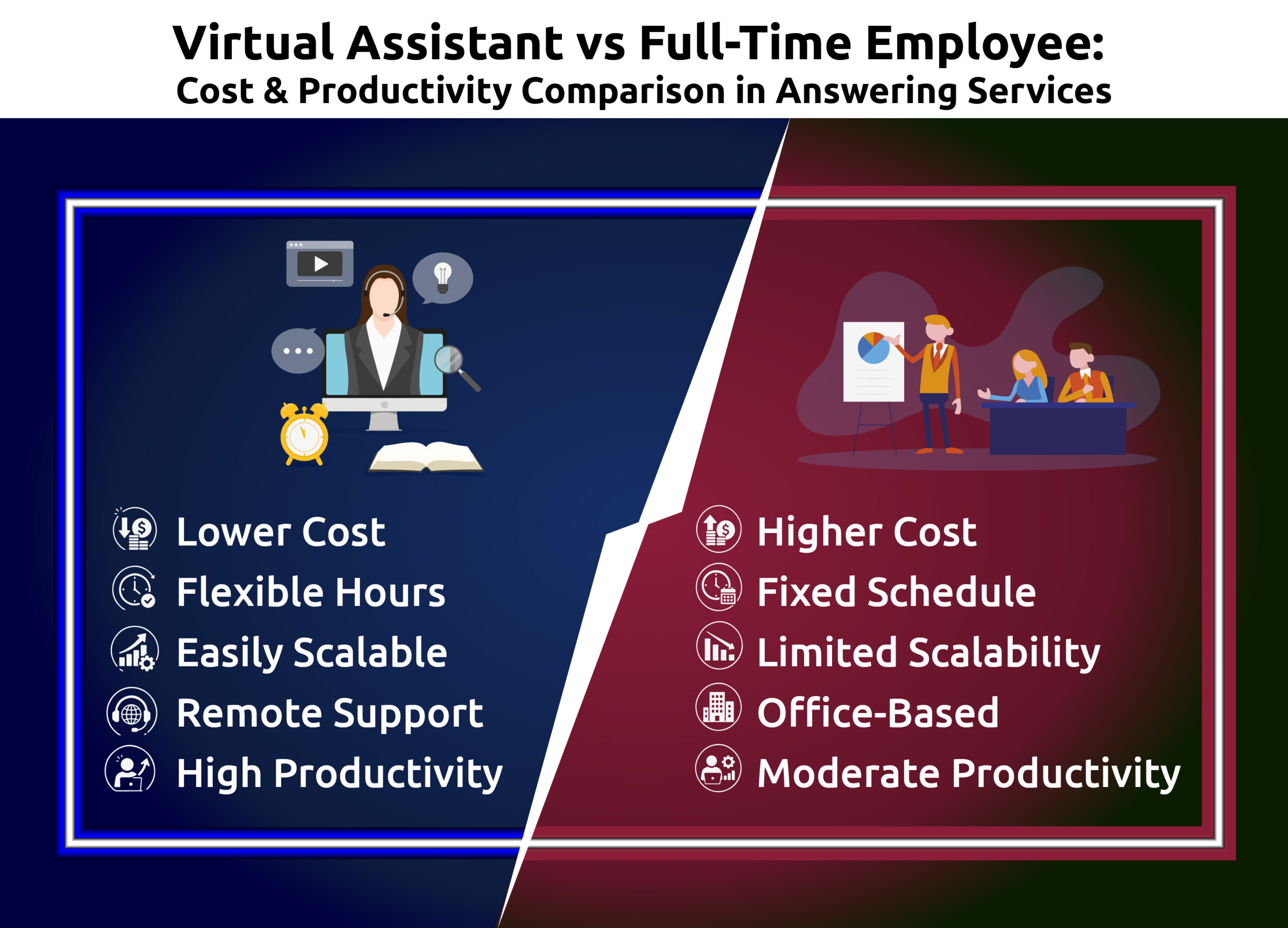
In today’s business environment, customer communication plays an important role in business success. Companies need to manage inbound inquiries, respond to support requests, and make sure customer calls are answered. How they organize their support teams can affect both operating costs and productivity.
Traditionally, businesses have relied on full-time, in-house employees to manage answering services. This approach provides direct oversight but comes with higher operating costs and less flexibility.
Outsourcing virtual assistant support offers another option. Businesses can access remote professionals and adjust support based on their operational needs.
At IdeasUnlimited, we help businesses manage answering services through remote support solutions. Understanding the differences between these two staffing models can help you decide which approach makes sense for your business.
Understanding the Two Models
A full-time employee is a permanent, in-house team member responsible for handling calls, responding to inquiries, and managing customer interactions during assigned working hours. This arrangement gives businesses direct oversight of daily activities. However, it also requires a long-term staffing commitment and the resources to support an in-house employee.
Virtual assistants are remote professionals who provide answering services and customer support on a flexible basis. Businesses can adjust the level of support based on call volume and operational demand. Both models help businesses manage customer communication. The main differences become clearer when comparing their costs, productivity, and flexibility.
Cost Comparison: Fixed vs Flexible Investment

One of the biggest differences between hiring a full-time employee and outsourcing to a virtual assistant is the cost structure.
Hiring an in-house employee involves more than paying a salary. Businesses must also account for:
- Recruitment and hiring expenses.
- Training and onboarding.
- Employee benefits.
- Office space and equipment.
- Ongoing administrative costs.
- Payroll during periods of low call volume.
These expenses can add up, even when incoming call volume does not justify a full-time workload.
A virtual assistant outsourcing company offers a more flexible cost model. Businesses typically pay for the hours worked or services delivered, depending on the agreed arrangement. This can reduce the need for additional infrastructure and make it easier to adjust support levels. Onboarding may also take less time when working with an established provider.
For businesses looking to manage expenses while maintaining answering service coverage, outsourcing virtual assistant services can help reduce overhead and improve cost efficiency.
Productivity and Efficiency

Productivity depends on how effectively working time is used. Simply having someone available throughout the day does not always mean resources are being used efficiently.
Full-time employees usually follow fixed schedules. These schedules may not match changes in call volume.
For example:
- During quiet periods, employees may have limited call-handling work while the business continues paying their salaries.
- During peak periods, the same employees may struggle to manage the volume of incoming calls.
- Heavy workloads can lead to longer wait times and delayed responses.
Virtual assistants offer more flexibility when managing workloads. Businesses can adjust support based on demand and allocate resources where they are needed.
This can help improve response times, reduce customer wait times, and maintain a better customer experience.
Virtual assistants may also work within established systems designed to support consistent performance. These can include:
- Call-handling procedures.
- Response templates.
- Performance tracking.
- Defined communication processes.
Together, these practices help improve day-to-day efficiency.
Scalability and Flexibility

As businesses grow, their communication needs change. Call volumes may increase during busy seasons, new campaigns, or periods of expansion.
Growing an in-house team requires recruitment, training, and additional investment. These steps take time and can delay support when businesses need it quickly.
Virtual assistant support offers greater flexibility. Businesses can adjust their support arrangements based on current needs.
For example, the best virtual assistant for small businesses may provide additional coverage during:
- Seasonal increases in customer inquiries.
- Marketing campaigns that generate more calls.
- Extended operating hours.
- Business expansion into new markets.
This flexibility helps businesses respond to changing demand without committing to permanent staffing increases.
For answering services, it also helps ensure customer inquiries are handled even when call volumes fluctuate.
Quality and Consistency of Service

Maintaining service quality is a common concern when businesses consider outsourcing.
In-house teams offer direct supervision, but this does not automatically guarantee consistent service. High call volumes, limited staffing, and workload pressures can affect how quickly and effectively employees respond.
Virtual assistants working with experienced providers such as IdeasUnlimited follow structured processes designed to maintain service quality.
These processes may include:
- Initial training and onboarding.
- Call monitoring and performance reviews.
- Standardized answering procedures.
- Defined customer communication guidelines.
Consistent training and monitoring help ensure customer interactions meet established service expectations.
This supports a more uniform customer experience and helps businesses maintain customer trust and brand reputation.
Availability and Coverage

Full-time employees generally work within assigned schedules. Some businesses extend these hours through overtime or additional shifts, but this can increase staffing costs.
Virtual assistants offer another way to extend customer support coverage. Depending on the service arrangement, businesses can access support beyond standard office hours, including 24/7 coverage. This is particularly useful for companies serving customers across different time zones.
Extended coverage can help businesses:
- Respond to customer inquiries outside regular business hours.
- Handle calls during evenings and weekends.
- Support customers in different locations.
- Reduce missed calls and unanswered inquiries.
For answering services, consistent availability helps customers reach a business when they need assistance. It can also contribute to customer satisfaction and retention.
Management and Operational Complexity

Managing an in-house team requires ongoing supervision and administrative work. Managers and HR teams may need to handle:
- Employee scheduling.
- Performance management.
- Daily supervision.
- Training and development.
- Administrative responsibilities.
These tasks take time and can draw attention away from other business priorities.
Virtual assistants can reduce some of this operational workload. When businesses work with the right outsourcing partner, they gain access to trained professionals with established processes and the necessary support systems.
This reduces the amount of direct management required from the business while maintaining defined performance standards.
Risk and Long-Term Commitment

Hiring a full-time employee creates a long-term financial and operational commitment. Changes in business demand, economic conditions, or internal priorities can make it difficult to adjust staffing levels. Businesses may continue carrying employee costs even when their need for support decreases.
Virtual assistants offer a more flexible alternative. Businesses can adjust services to their current needs and avoid some of the commitments associated with permanent hiring. This flexibility can be valuable for companies operating in uncertain markets or experiencing changes in customer demand.
The Role of Virtual Assistants in Modern Answering Services
Answering services involve more than picking up incoming calls. Businesses need to understand customer needs, provide accurate information, and maintain clear communication throughout each interaction.
Virtual assistants can support these responsibilities through flexible staffing and established service processes.
With virtual support, businesses can work toward:
- Consistent customer communication.
- Faster responses to incoming inquiries.
- Better call coverage.
- More efficient handling of customer interactions.
These improvements can support service quality while helping businesses manage their day-to-day operations more effectively.
Which One Is Right for You?
Choosing between a virtual assistant and a full-time employee depends on how your business needs to manage costs, productivity, and customer communication.
Full-time employees provide direct oversight and a permanent in-house resource. However, this arrangement usually involves higher fixed costs and less flexibility when staffing needs change.
Virtual assistants offer an alternative for businesses looking to manage expenses, adjust support levels, and maintain consistent answering service coverage.
For small businesses in particular, the right virtual assistant arrangement can provide access to professional support without the full costs associated with permanent staffing.
At IdeasUnlimited, we help businesses manage customer communication through reliable virtual support. Our teams can help answer service requests and handle other support tasks based on your operational needs.
If you are considering outsourcing virtual assistant tasks for the first time or reviewing your current staffing approach, the right support arrangement can help you improve customer communication and manage operations more effectively.