Skip to content
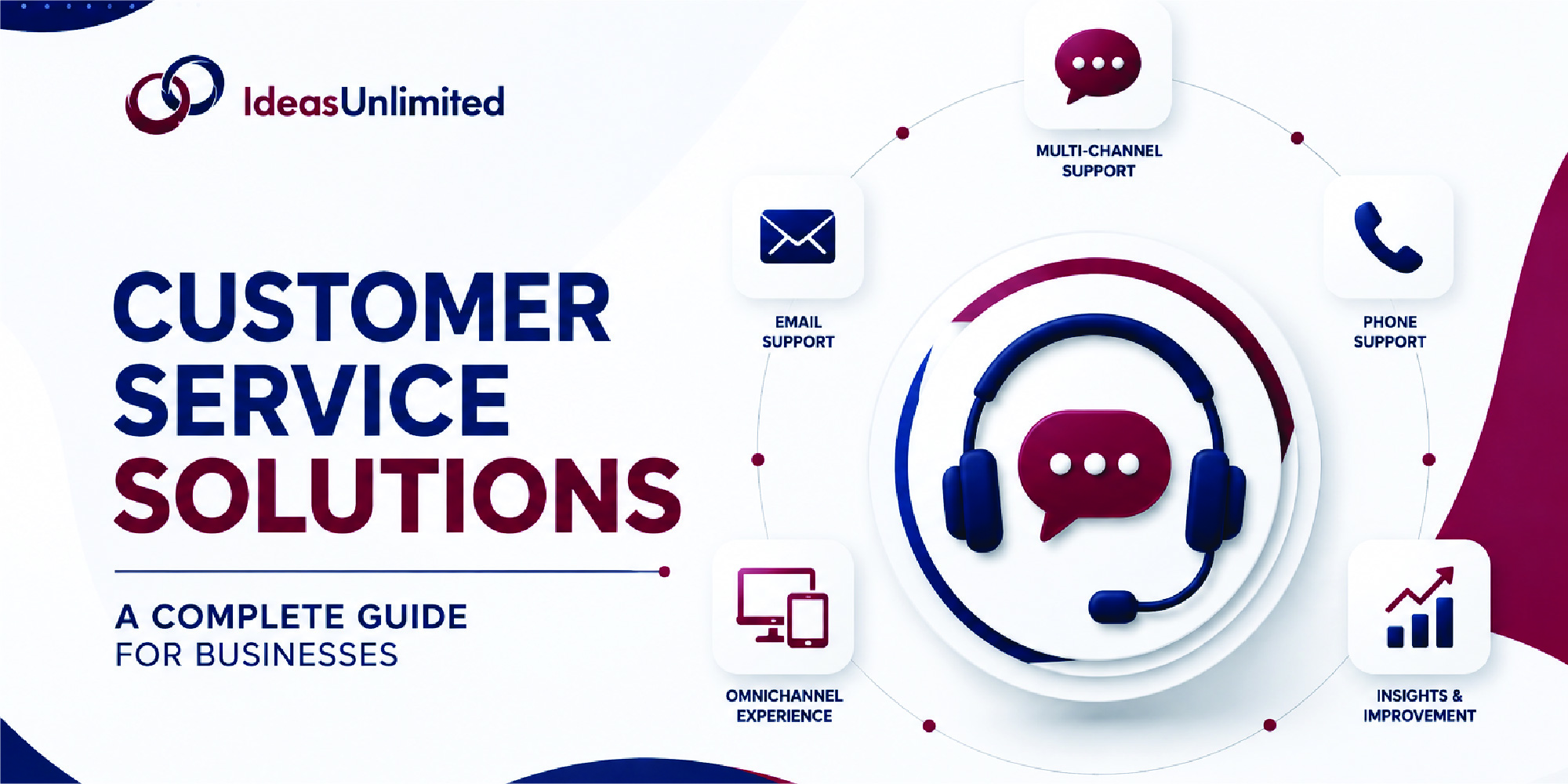
Customer expectations have changed significantly. Customers no longer want to wait until the next business day to get an answer. They expect companies to be accessible, responsive, and helpful whenever they need assistance.
At the same time, customer conversations are taking place across more channels. A customer may call a business, send an email, start a live chat, or reach out through social media. For companies serving customers across different locations and time zones, managing these interactions can quickly become challenging.
This is where effective customer service solutions become important.
A complete customer service solution goes beyond answering questions. It brings together trained support professionals, communication channels, structured processes, and technology to help businesses manage customer interactions efficiently.
Technology also plays an important supporting role. Customer service platforms, support tools, service software, and customer service apps help teams organize and manage interactions. However, these technologies work best when supported by trained people and well-defined processes.
Understanding how these parts work together can help businesses build a customer service team. This support can drive customer satisfaction and long-term growth.
What Are Customer Service Solutions?
Customer service solutions combine the people, processes, communication channels, and technologies businesses use to support their customers.
The exact structure can vary by company. A small business may primarily need someone available to answer incoming calls and emails. A larger company may need a dedicated team assisting around the clock through several channels.
Customer service solutions can include:
• Phone support
• Email support
• Live chat
• Social media support
• Help desk services
• Inbound customer support
• Trained customer service representatives
• Multilingual support
• Customer service platforms
• Customer support tools
• Customer service software
• Defined workflows and operating procedures
These components serve different purposes, but they share one goal. They make it easier for customers to get help.
The best solution is therefore not necessarily the one with the most technology or the largest team. It aligns with how customers communicate and gives the business enough capacity to handle interactions consistently.

Why Do Businesses Need Effective Customer Service Solutions?
Customer service can become increasingly difficult to manage as a company grows.
More customers usually mean more calls, emails, chats, questions, complaints, and requests. Seasonal periods or marketing campaigns can cause sudden increases in demand. Expansion into other markets can also create challenges around time zones and languages.
Without the right support structure, internal teams can become overwhelmed.
Effective customer service solutions help businesses create a more organized way to manage those interactions.
Improve Customer Availability
Customers don’t always need assistance during convenient business hours. Providing broader availability gives them more opportunities to reach someone when they need support.
Handle Growing Customer Volumes
As inquiry volumes increase, businesses need enough capacity to keep customer communications manageable. A scalable customer service model allows resources to grow alongside demand.
Create More Consistent Customer Experiences
Clear processes and trained support professionals help businesses maintain similar service standards across different conversations. Consistency becomes especially important when several agents or teams communicate with customers.
Support Business Growth
Customer service requirements often grow alongside the business itself. Companies entering new markets, launching new products, or gaining new customers need support that can keep up. Therefore, businesses should consider customer service part of business growth rather than simply a response to problems.
What Are the Main Components of Customer Service Solutions?
Modern customer service operations, for example, IdeasUnlimited’s Ecommerce Virtual Assistant Services, combine human support with technology. Understanding each component helps businesses decide where to invest their resources.
Customer Service Platforms
Customer service platforms provide businesses with an environment to organize and manage customer interactions.
Depending on the platform, teams can keep communications organized. They can maintain customer records. They can coordinate interactions across different channels.
This can be particularly useful when multiple customer service representatives handle a large number of inquiries.
However, the platform is only the infrastructure supporting the interaction. The customer still needs someone who can understand the question, communicate clearly, and provide the appropriate response. This is why technology and trained customer support teams should complement each other.
Customer Support Tools
Customer support tools help service teams manage specific aspects of their work.
The tools a company needs depend on its support operation. A team that answers phone calls has different needs.
Another team may support customers through live chat, email, and social media.
The important consideration is whether the technology supports the customer’s preferred way of communicating.
Businesses should avoid choosing tools simply because they offer a long list of features. Instead, they should first understand their customer journey, inquiry volumes, communication channels, and internal processes. You can then select technology to support those requirements.

Customer Service Software
Customer service software can help businesses keep customer communications organized and provide structure to day-to-day support operations.
For larger teams, a shared system makes it easier to follow established processes and keeps customer interactions visible.
Software can also help support teams work more efficiently, but it does not eliminate the need for human judgment.
Not every customer inquiry follows a predictable pattern. A customer may have a complex question, need more details, or need help with an issue outside a set workflow. These interactions require people who can understand context and adapt their response.
Customer service software should therefore enable the team rather than replace the entire customer service experience.
Customer Service Apps
A customer service app provides another digital environment for managing customer interactions.
Mobile accessibility has become increasingly important as both customers and businesses operate across multiple devices and locations.
Depending on the company’s customer service model, apps may provide additional flexibility and convenience. However, like other customer service technologies, an app represents only one part of the broader customer experience.
The quality of support ultimately depends on how effectively the technology, people, and processes work together.
Customer Service Solutions Across Different Support Channels
Customers have different preferences for communicating with businesses. Providing multiple channels makes support more accessible and lets customers choose the method most convenient for them.
IdeasUnlimited provides multi-channel customer support through phone, email, live chat, and social channels.
Phone Support
Phone support remains important when customers want direct communication.
Some situations are easier to explain over the phone. This is especially true when a customer has several questions. It also helps when they need support with a complicated issue.
Professional phone support gives businesses a direct line of communication with their customers. For businesses receiving substantial incoming call volumes, dedicated inbound call center services can provide the people and coverage needed to handle those conversations consistently.
Email Support
Email provides customers with a convenient way to send questions that may not require an immediate conversation. It also allows businesses to provide detailed written responses.
For support teams, effective email customer service requires clear communication, timely responses, and processes to ensure customer inquiries reach the right people.
Live Chat Support
Live chat combines digital convenience with real-time communication.
Customers on a website may prefer to open a chat. They may not want to call or wait for an email reply.
For businesses, live chat offers another opportunity to assist customers as they interact with the brand.
Social Media Support
Social channels have also become an important part of customer communication.
Customers may use social platforms to ask questions or request assistance, making these channels another potential touchpoint for customer service.
When businesses provide support across multiple channels, maintaining consistent communication becomes especially important. Customers should get the same level of professionalism, whether they call, email, chat, or use social media.
Why People Still Matter in Customer Service
Customer service technology has become increasingly useful, but people remain central to the customer experience.
Customers do not always contact businesses with straightforward questions.
They may need guidance to identify the right solution. They may have already attempted to solve the problem themselves. Sometimes, the situation simply requires someone who can listen and understand the context.
Trained customer service professionals can listen to customer concerns and answer questions. They explain information clearly and guide customers through processes. They resolve issues within established procedures and handle more complex interactions. They also represent the company’s communication standards.
This human element is particularly important when customer conversations require judgment. Technology can help organize an interaction. But the conversation quality depends on the person talking to the customer.
This is also why training matters. Customer service representatives need to understand the company they represent. They should be familiar with its processes and expected service standards.
IdeasUnlimited addresses this through dedicated support teams trained around each client’s brand and processes.
24/7 Support as Part of a Customer Service Solution
Traditional business hours do not always match modern customer behavior.
Customers can interact with websites and digital services at any hour. Businesses serving several markets may also have customers operating in completely different time zones.
A company may therefore have excellent customer service software and sophisticated customer support tools. However, customers can still experience delays if nobody is available to respond.
This is where 24/7 support becomes valuable.
Continuous customer support lets businesses stay available outside traditional operating hours. It can be useful for businesses with customers in many time zones.
It also helps companies that need support outside office hours. It suits organizations with high or changing inquiry volumes. It supports businesses that are expanding internationally. It also helps companies that need more customer service capacity.
IdeasUnlimited provides 24/7/365 customer support coverage and the ability to scale support according to client requirements.

The Importance of Scalable Customer Support
Customer demand is rarely completely predictable.
Some businesses experience seasonal peaks. Inquiries can increase after a product launch, campaign, market expansion, or business growth.
Building an internal team for peak demand can be difficult because the business may not need the same number of people year-round. On the other hand, maintaining too little capacity can create pressure when customer inquiries suddenly increase.
Scalable customer support gives businesses greater flexibility. Instead of treating customer service capacity as fixed, companies can adjust resources to meet business needs.
This is one area where outsourced customer service can complement an internal team. An outsourcing partner can provide extra support when customer demand grows.
IdeasUnlimited structures its customer support offering to scale during peak periods and according to changing business requirements.
Multilingual Customer Service for Global Businesses
Expanding internationally creates another customer service challenge: language.
A business may successfully attract customers in a new market. However, it can struggle to provide great service if its support operations are limited to one language.
Language barriers can make customer conversations more difficult and create unnecessary confusion.
Multilingual customer support allows businesses to communicate with a broader customer base in languages those customers understand. This can become particularly valuable for businesses operating internationally or planning to enter additional markets.
IdeasUnlimited provides multilingual customer support capabilities for diverse customer bases. Multilingual support, combined with 24/7 coverage, helps businesses address both language and time zone barriers as they expand.

In-House vs. Outsourced Customer Service Solutions
Another important decision is who will provide the customer support.
Some businesses build customer service entirely in-house while others outsource their entire operation. Neither approach is automatically right for every organization.
In-House Customer Service
An internal team gives the business direct control over hiring, training, schedules, and day-to-day management.
This works well when the business can manage and maintain its own customer service team.
However, the business also assumes responsibility for the infrastructure and management required to keep the operation running.
Outsourced Customer Service
Outsourcing allows a business to work with an external customer service provider.
This can be useful when the organization needs broader availability, additional capacity, specialized support, or greater flexibility.
An outsourced model may also make it easier to scale customer support as demand changes.
The key is choosing a provider that understands the brand and works to established standards. IdeasUnlimited’s outsourced customer support model uses dedicated agents and teams trained around individual client requirements.
Looking for an outsourcing partner that would make your life easier? Check out IdeasUnlimited’s unparalleled level of Ecommerce Virtual Assistant Services!
How Customer Service Solutions Support Business Growth
Customer service is often viewed as something that happens after a sale. In reality, it can influence the broader relationship between a business and its customers.
As companies grow, their customer service operation needs to grow with them.
Imagine an ecommerce company entering several new markets. More sales may mean more questions about orders, products, deliveries, and returns. Customers may contact the company at different times and through different channels. International expansion may also introduce language requirements.
The company’s customer service solution now needs to accommodate more customers. It must also accommodate more interactions, more channels, longer coverage, and greater support capacity.
Without the right infrastructure, growth can place significant pressure on existing customer service resources. The same principle applies across many industries.
An ecommerce customer service solution should cover what it may need as customer demand changes.
Customer Service Solutions for Ecommerce Businesses
The ecommerce industry is a good example of an industry where customer support and technology need to work closely together.
Customers may need assistance before or after placing an order. Questions can relate to products, orders, account information, or other parts of the shopping experience.
Because ecommerce stores are accessible around the clock, customer inquiries are not always limited to standard office hours.
A scalable ecommerce customer support structure can help online businesses maintain communication as transaction and inquiry volumes increase.
The same principle applies to other industries. A customer service solution should reflect the type of interactions customers are likely to have with the business.
Security and Customer Service Operations
Customer support teams may handle information that needs to be managed carefully.
Businesses should consider security when choosing customer service providers and processes.
Exact requirements can vary significantly depending on the industry and the type of information involved.
IdeasUnlimited offers customer support operations that support relevant security and compliance measures, including PCI, HIPAA, and GDPR-related requirements.
How to Choose the Right Customer Service Solution
No universal customer service setup works for every business.
Before choosing technology, adding staff, or outsourcing support, companies should understand their actual requirements.
1. Identify Your Customer Channels
Start by determining how customers currently contact the business. Determine the communication channels your customers prefer, such as phone, email, or live chat. This information helps businesses identify where they need support resources.
2. Understand Your Support Hours
Consider when customers contact the business. If inquiries regularly arrive outside working hours, you may need broader coverage. Businesses serving international customers should also consider different time zones.
3. Review Customer Volumes
Look at both normal and peak inquiry levels. A solution that works during an average week may struggle during seasonal periods or periods of rapid growth.
4. Assess Your Existing Technology
Businesses may already use different tools and software to manage customer service.
The question is whether the people and processes around those systems are sufficient. Adding another tool will not necessarily solve a staffing or availability problem.
5. Consider Growth
Ask whether the customer service operation can grow without creating major disruption. A scalable solution should accommodate changing customer volumes and business requirements.
6. Evaluate Language Requirements
Businesses should ensure their teams can support customers in the languages they use.
7. Consider Security and Compliance
Review how customer information will be handled and whether industry-specific requirements apply.
8. Decide Between In-House and Outsourced Support
Finally, determine whether the business has the internal resources to provide the required support. If not, outsourcing operations may provide additional coverage and flexibility.
Customer Service Best Practices
Choosing the right customer service solution is only the beginning. Businesses also need to use it effectively.
Ensure clear communication. Customers should be able to find ways to reach the business without unnecessary effort.
Maintain consistent standards. Whether a customer communicates through phone, email, live chat, or social media, the quality of service should remain consistent.
Better equip the support teams to represent the brand. Agents need enough knowledge of the business and its processes to provide useful assistance.
Being ready for change in demand is important. Businesses should consider what happens when inquiry volumes increase rather than waiting until their existing team becomes overwhelmed.
Use technology to support people. Customer service tools should make support easier to manage, not create unnecessary complexity.
Check performance regularly. Businesses should monitor their customer service operation and identify where processes, staffing, or workflows need improvement.

Common Customer Service Challenges and How to Address Them
Even businesses with established customer support operations can encounter challenges.
High inquiry volumes: Additional or scalable staffing can help manage periods of increased demand.
Limited availability: Extended or 24/7 coverage can help businesses support customers outside normal operating hours.
Multiple communication channels: A structured multi-channel approach helps businesses manage phone, email, chat, and social interactions more consistently.
International customers: Multilingual support and broader time-zone coverage can make customer service more accessible.
Inconsistent service: Training, documented processes, and clear standards can help support teams deliver more consistent interactions.
Internal resource limitations: Outsourced customer support can provide additional people and capacity when internal resources are limited.
The right solution depends on identifying the actual problem first. Businesses should not assume that new software can solve every customer service challenge.
Sometimes the missing component is technology. In other situations, it is people, availability, processes, training, or capacity.
Frequently Asked Questions About Customer Service Solutions
What are customer service solutions?
Customer service solutions are the combination of people, processes, communication channels, and technology businesses use to assist customers. These solutions can include phone, email, live chat, social media, software, and trained support teams.
What is the difference between customer service software and customer service solutions?
Customer service software is technology that supports customer service operations. A customer service solution is broader and can include software alongside people, processes, communication channels, training, and support infrastructure.
What are customer service platforms?
Customer service platforms are systems businesses can use to organize and manage customer interactions. Their specific capabilities vary depending on the platform.
What are customer support tools?
Customer support tools are technologies that assist teams with various aspects of customer service. The appropriate tools depend on the company’s communication channels, customer volumes, and business requirements.
Can you outsource customer service?
Yes. Businesses can outsource their customer support operations to a third-party provider. This can provide additional staffing, extended coverage, multilingual capabilities, and greater growth depending on the provider.
Why is 24/7 customer support important?
24/7 support allows customers to receive assistance outside traditional business hours. It helps businesses support customers anytime and anywhere.
Does customer service technology replace human agents?
Technology can make customer service more organized and efficient, but many interactions still benefit from human communication and judgement. The right balance depends on the business and its customers’ needs.
Build Customer Service Around Your Customers
No single piece of technology defines the right customer service solution.
Customer service tools help businesses manage interactions, while trained teams and clear processes ensure effective support. Businesses should therefore start with their customers and understand when, where, and how customers need support.
Answering these questions makes it easier to build a customer service model around real business needs.
IdeasUnlimited provides 24/7/365 outsourced customer support through phone, email, live chat, and social channels. Its services include dedicated teams, multilingual support, scalable resources, and structured processes designed around client requirements.
Explore IdeasUnlimited’s 24/7 Customer Support Services to get reliable support for your customers around the clock.