Skip to content

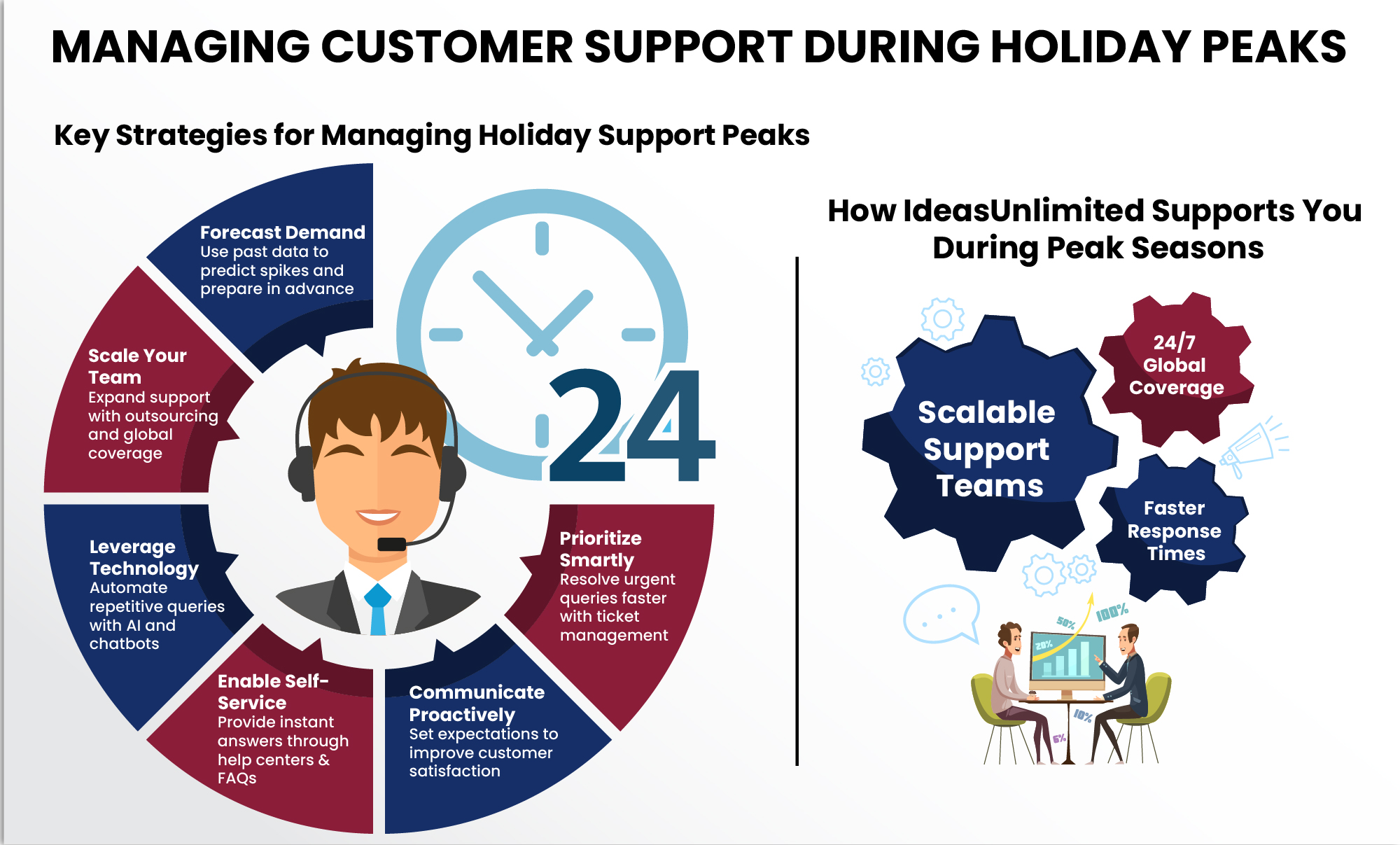
The holiday season brings growth opportunities and additional revenue for businesses. However, it also brings more customer inquiries, complaints, and service demands.
For customer support teams, what begins as an exciting period can quickly become overwhelming without proper planning.
The difference between a brand that succeeds during the holiday season and one that struggles often comes down to how well it prepares its customer support teams.
Managing holiday demand involves more than handling increased call and message volumes. Businesses must also maintain service quality, response speed, and customer satisfaction.
Successful preparation begins long before the holiday rush.
Forecasting Demand with Data Insights

Forecasting plays an important role in managing customer support during peak seasons.
By analyzing data from previous holiday periods, businesses can identify patterns in customer behavior and anticipate demand.
Historical data can reveal:
- Days with higher ticket volumes.
- Customer inquiries that occur more frequently.
- Hours when support activity typically increases.
These insights help businesses anticipate customer needs instead of reacting to sudden increases in demand.
Effective forecasting makes it easier to plan support resources and manage customer inquiries efficiently.
Scaling Support Teams Strategically

Having enough support staff is essential during peak seasons.
Relying only on existing teams during the holidays can quickly lead to employee burnout and a decline in customer experience.
To manage increased demand, many businesses choose to expand their support operations through outsourcing or global teams.
This approach offers two important advantages:
- Reduces pressure on internal support staff.
- Enables 24/7 support coverage, especially for businesses serving customers across multiple time zones.
Strategically scaling support teams helps businesses maintain service availability without placing excessive demands on existing employees.
Using Technology to Handle High Volumes

Increasing the size of a support team is not always possible. This is where technology can help.
Technology has changed how businesses manage customer support during peak seasons. Instead of relying on human agents to answer every repetitive question, businesses can use technology to handle common inquiries.
For example:
- Customers asking about their orders can receive immediate answers.
- Common questions can be addressed through automated responses.
- More complex inquiries can be directed to human support staff.
This allows support teams to focus their attention on customers who need additional assistance.
Empowering Customers with Self-Service

Another important part of holiday customer support is helping customers find answers independently.
Self-service has become increasingly popular, especially during peak seasons. Customers often prefer quick answers instead of waiting for assistance.
A help center can support this need by providing information about common customer concerns.
Businesses can use self-service resources to:
- Answer frequently asked questions.
- Provide information about common issues.
- Help customers find relevant information without contacting support.
These resources reduce the overall pressure on customer support teams.
However, the information must be relevant to the holiday season and address the questions customers are likely to have during this period.
When customers can find answers independently, they can enjoy a more satisfactory experience.
Maintaining Clear and Proactive Communication

Communication plays an essential role in maintaining customer satisfaction, especially during peak periods.
Sometimes, delays are unavoidable. However, poor communication can make the situation worse.
Customers are more patient and understanding when they know what to expect. Businesses should therefore keep customers informed about delays, service updates, and other important information.
Simple communication measures can make a difference, including:
- Sending automatic acknowledgments.
- Updating website banners.
- Sending customer notifications.
These steps help set expectations and keep customers informed throughout the support process.
Prioritizing Support Requests Effectively

As customer inquiries increase, prioritization becomes essential.
Not every inquiry has the same level of urgency. Treating all requests equally can delay resolving critical issues.
Businesses can address this challenge through smart ticket management.
This approach allows customer inquiries to be:
- Categorized according to their nature.
- Prioritized based on urgency.
- Assigned appropriate response times.
Critical inquiries can then receive attention first, while general requests are handled efficiently.
An organized ticket management process helps support teams manage high volumes without overlooking urgent customer concerns.
Training Teams for Peak Performance

Behind every successful support process is a well-prepared team.
Training becomes even more important during the holiday season. Support staff must be ready to handle higher inquiry volumes and more complex customer needs.
Preparing teams in advance helps maintain consistent service quality.
Training should cover:
- Product knowledge.
- Promotional schemes.
- Effective communication skills.
Keeping agents updated on these areas helps ensure customers receive consistent support.
A confident support team can resolve customer problems more efficiently and create a more pleasant experience.
Monitoring Performance in Real Time

Real-time monitoring is another important part of managing holiday customer support.
Support volumes can change quickly during peak seasons. Businesses need to stay flexible and respond as changes happen.
Monitoring key support metrics helps teams identify problems before they become larger issues.
Important metrics include:
- Response times.
- Resolution rates.
- Customer satisfaction scores.
With real-time data, teams can identify areas requiring attention and take immediate action.
This may involve:
- Reassigning tasks.
- Adjusting team responsibilities.
- Making changes to support operations.
Without real-time information, minor issues can quickly develop into major problems.
Delivering a Seamless Omnichannel Experience

In today’s digital environment, customers expect a consistent experience regardless of the communication channel they use.
An omnichannel approach brings customer interactions together across different channels.
This gives customer service representatives a better understanding of previous conversations and customer concerns.
When information is connected, agents can access the context of earlier interactions instead of asking customers to repeat themselves.
This creates a better experience for customers and makes it easier for representatives to provide effective support.
Turning Peak Season Challenges into Opportunities
The work does not stop when the holiday season ends. Instead, businesses should take time to review performance and identify opportunities for improvement.
This is the time to:
- Analyze support performance.
- Understand customer experiences.
- Identify important insights.
- Improve strategies for future peak seasons.
Ultimately, the goal of holiday customer support is not simply to survive the rush. Businesses should develop support operations that are resilient, scalable, and customer-focused.
In an increasingly competitive marketplace, customer experience can make all the difference.
If your business is preparing for seasonal demand or sudden increases in customer inquiries, consistent 24/7 support becomes essential. It helps keep customers engaged and reduces missed interactions.
Explore ourCustomer Support Services to ensure every call, message, and inquiry is handled without delay.